
Large Loads
As an electric cooperative, Dakota Electric is committed to providing safe, reliable, and affordable power to our members. Learn answers to commonly asked questions about large new electrical loads, like data centers, and how Dakota Electric protects existing members while fulfilling its obligation to serve.
Frequently Asked Questions
A large load is any new or expanding project that requires a significant increase in electric demand. Typically, several megawatts (MW) or any project that may require additional evaluation of the electric distribution system.
Examples include:
- Data Centers
- Large manufacturing or processing facilities
- Major commercial or mixed-use developments
- Electric fleets with high-capacity charging
These projects require special engineering review, planning, and potential infrastructure upgrades.
We have served large loads for more than 20 years. Before any project is approved, we evaluate the request through a structured process that ensures the system stays reliable and resilient. Our system is designed for long-term reliability, not just short-term needs.
Each project is individually studied to determine whether there is sufficient capacity to serve it without affecting existing members. This includes conducting engineering and reliability studies, and identifying the necessary system upgrades, costs, and timelines before service can be provided. If there isn’t enough capacity, the project cannot proceed unless upgrades are made at the project developer’s expense.
When a data center is looking to build in Dakota Electric’s service area, it is our responsibility and statutory requirement to ensure we can serve it safely, reliably, and without impacting service to our existing members. While Dakota Electric does not participate in, or influence, local land use, planning, or zoning decisions; we do support communities that review or approve these projects as part of this obligation to serve.
Dakota Electric will not approve a project that would increase the risk of outages or reduce system reliability for current members. Our system planning standards and regional requirements are specifically designed to prevent this from happening.
Dakota Electric requires the project developer to pay for the cost of all upgrades to the distribution and transmission system through contractual agreements. These agreements are reviewed by Dakota Electric’s Board of Directors to ensure no negative financial impact for existing members. Additionally, no project costs are passed on to Dakota Electric’s existing members — even if the project is later abandoned.
Electric markets and grid structures vary across the country. Dakota Electric operates within a regulatory and market framework focused on long-term reliability and member protection. Other regions may operate under different regulatory and planning frameworks.
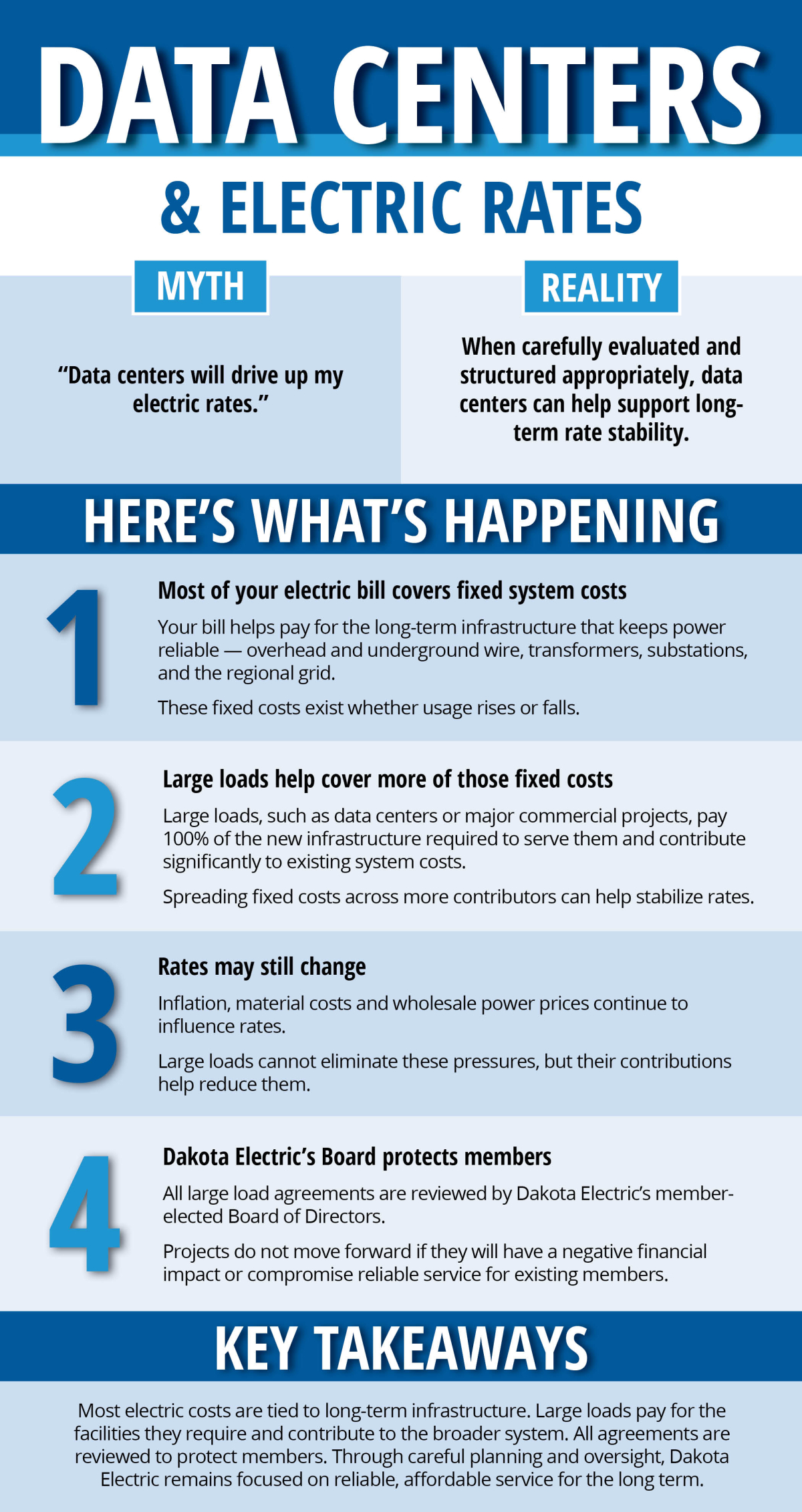
Data Centers and Electric Rates